



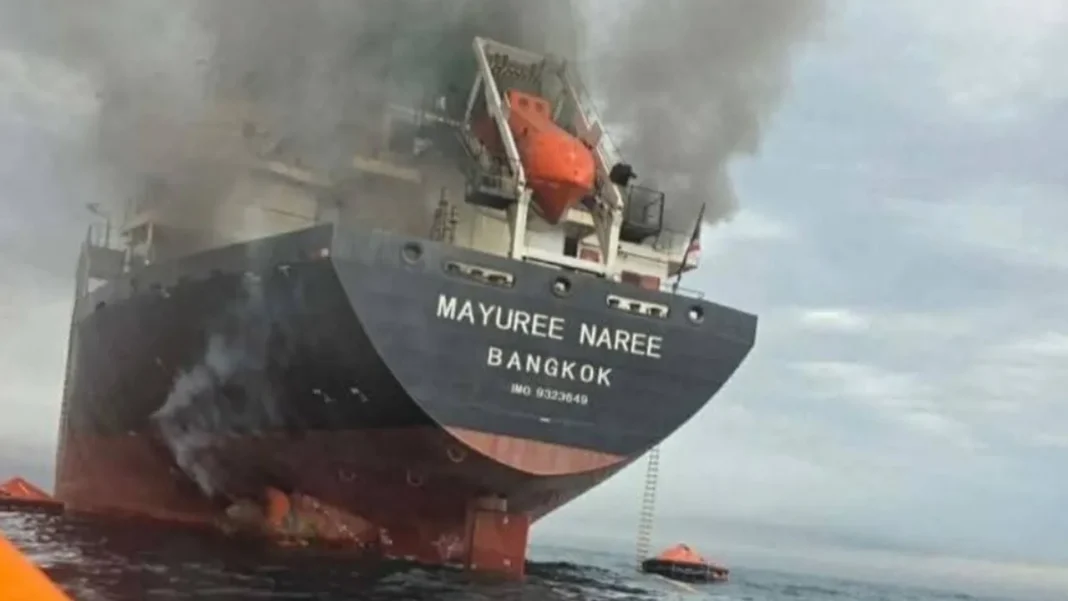


The conflict has all but closed the Strait of Hormuz left thousands of ships stranded, and at least 18 vessels struck in direct attacks or by debris
The last month has been the most dramatic in my over 25-year career of reporting on shipping. The US/Israel attacks on Iran and ensuing war have realised the worst nightmares for shipping in terms of what could happen in the Strait of Hormuz and the wider gulf region.
Within hours of the first strikes by the US and Israel on 28 February it became clear that the Strait of Hormuz was going to be a key point of leverage for Iran and audio recordings of VHF Channel 16 warnings to ships that the Strait was closed circulated on What’s App.
The key waterway normally sees around 20% of the world’s oil and gas move through it, roughly 10% of global container throughput, as well as large volumes of fertiliser exports and food imports into the region.
Now while legally speaking Iran could not unilaterally close the Strait the threat to commercial shipping in this narrow choke point was a very clear one and present one and as a result vessels almost immediately began diverting away either turning back into the Arabian Gulf or holding position in the Gulf of Oman.
Shipping and its infrastructure were very much on the front line and by the second day of the conflict Seatrade Maritime News was reporting on strikes on the ports of Jebel Ali in Dubai and Duqm in Oman, as well as the first attack on a merchant ship the 11,622 dwt tanker Skylight off Oman with four crew injured, one killed, and one seafarer missing.
Attacks on ships
To date there have been 18 confirmed incidents of ships be attacked or struck in the region according to the International Maritime Organization (IMO), all taking place between 1 March and 19 March. Nine seafarers are known to have died in these attacks another four are missing, as well as number more severely injured.
Given the extreme dangers of transiting of the Strait, not to mention skyrocketing rates for war risk insurance, only a handful of ships even attempted the sailing in the early weeks of the conflict, some ill-fatedly such as the Thai-flagged bulker Mayuree Naree.