



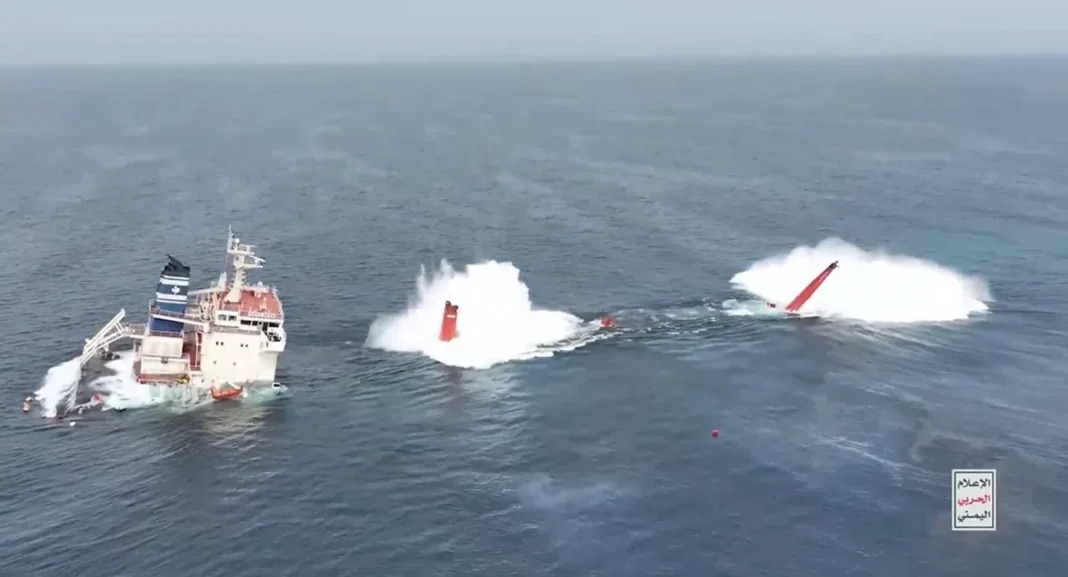


Weekend attacks on Israel by Houthi rebels and the possible closure of the Bab al-Mandeb Strait could prevent Red Sea transits entirely.
The Strait of Hormuz and the Bab al-Mandeb Strait which links the Red Sea with the Gulf of Aden are two key stretches of water essential for global trade. The 18-mile-wide Bab al-Mandeb is an essential gateway at the southerly end of the Red Sea. It is important for dry bulk, tanker, gas, chemical and container trades from Asia to Europe via Suez.
Meanwhile, with tanker traffic out of the Arabian Gulf sharply down and export facilities damaged in various countries across the region, Saudi Arabia’s Red Sea port of Yanbu is now a vital export terminal for crude oil and products. However, this key oil export route is now also under threat and Yanbu itself could itself be attacked by drones and missiles from the Houthi.The port is served by Saudi’s East-West pipeline which is now said to be operating at its full capacity of seven million barrels a day. However, the renewed threat of Houthi attacks on shipping in the Red Sea could render this export route for oil and products far too risky. This would impose extra strain on the world’s energy supply chain and push up already elevated prices still further.
Major container lines including CMA CGM, Hapag-Lloyd and Maersk had already rerouted vessels around the Cape of Good Hope earlier this year.
The voyage around the Cape adds at least 3,500 nautical miles to container ship voyages which typically take 8-12 days longer and require hundreds of tonnes in extra bunker fuel. For dry and liquid bulk vessels operating at slower speeds, the extra distance can mean voyages take 15-20 days longer.