



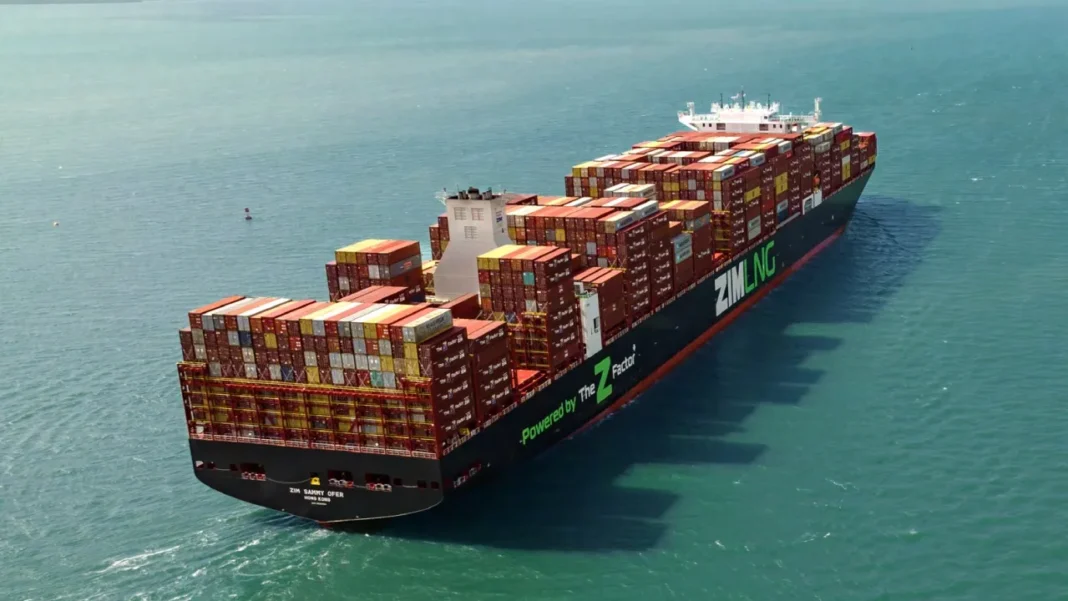


Sustained demand on Zim’s key service offerings on the Pacific have bolstered the company’s income, prompting an increase in its full-year profit forecasts.
Zim’s updated forecast increases its projected income by 30%, with adjusted EBITDA rising to between $2.7bn and $3bn from the mid-year prediction of $2bn, the EBIT forecast increased by 72% to between $700m and $1.1bn.
The company, however, warns that the updated forecast is dependent on geopolitical factors, and trade uncertainties, which includes the sale of the carrier to Hapag-Lloyd, a transaction that now hangs in the balance.
Israel’s Government Companies Authority (GCA), announced it had ceased handling a pending application regarding the Israeli government’s golden share, a necessary approval step for the transaction to proceed. Hapag-Lloyd and FIMI, would-be owner of a newly-formed Zim Israel, missed the document submission deadline for its revised acquisition proposals, according to Zim.
“It appears to put the deal back to zero,” commented Alphaliner, “With the potential buyers having to go through a fresh approval process.”
It is understood that a new proposal was required by 6 October, but it remains unclear whether this deadline has been met.
In the interim, a group of Zim shareholders has also challenged whether a revised deal can be approved by the board alone, claiming instead it should go to a full shareholder vote, further complicating the situation.
The proposed take-over by Hapag-LLoyd would see Israeli private equity firm FIMI Opportunity Funds operating the 100%-owned New Zim with a fleet of 16 vessels, a move aimed at satisfying Israeli security concerns.
Israel’s Finance Ministry, however, objected to the proposals, stalling the $4.2bn sale, citing concerns over national security and maritime independence.
“The transaction should not be approved in its current framework as the risks inherent in the deal as currently structured outweigh its benefits,” the Finance Ministry said in its analysis of the deal.
The ministry added: “As those responsible for government policy, it is our duty to ensure that any such transaction safeguards Israel’s vital interests, specifically regarding the long-term financial stability of Zim Israel and eliminates dependence on entities hostile to the State of Israel.”