




In a statement sent to Rigzone on Friday, the Marine Minerals Administration (MMA) revealed that personnel had been evacuated from a total of 129 production platforms in the Gulf, based on data from offshore operator reports submitted as of 11am CDT today.
That represents 34.77 percent of the 371 manned platforms in the Gulf of America, the MMA highlighted, noting that production platforms are the offshore structures from which oil and natural gas are produced and transported to shore. The MMA pointed out in the statement that, unlike drilling rigs, which typically move from location to location, production facilities remain in the same location throughout a project’s duration.
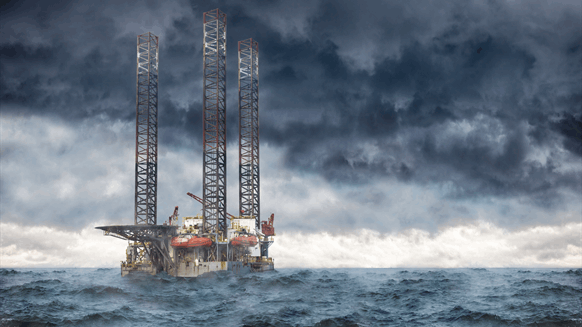
The statement also revealed that personnel had been evacuated from eight non-dynamically positioned rigs, which it noted was equivalent to 72.73 percent of the 11 rigs of this type currently operating in the Gulf. Rigs can include several types of offshore drilling facilities including jack up rigs, platform rigs, all submersibles, and moored semisubmersibles, the statement highlighted.
Two of the 17 dynamically positioned rigs in the Gulf have moved off location out of the storm’s path as a precaution, according to the MMA, which noted that dynamically positioned rigs maintain their location while conducting well operations by using thrusters and propellers. These rigs are not moored to the seafloor, so they can move out of harm’s way in a relatively short time frame, the MMA stated, adding that personnel remain on board and return to the original location once the storm has passed.
Production Shut In
In its statement, the MMA outlined that, from operator reports, it estimates that approximately 71.51 percent of the current daily oil production and 58.84 percent of the current daily natural gas production in the Gulf of America has been shut in.
The production percentages are calculated using information submitted by offshore operators in daily reports, the MMA noted. Shut-in production information included in these reports is based on the amount of oil and gas the operator expected to produce that day, the MMA said, adding that the shut-in production figures are estimates that the MMA compares to historical production reports to ensure the estimates follow a logical pattern.
“The Marine Minerals Administration is monitoring offshore oil and gas operators in the Gulf of America as they evacuate platforms and rigs in response to the storm,” the MMA said in the statement.
“The Marine Minerals Administration team will work with offshore operators and other state and federal agencies until operations return to normal, and the storm is no longer a threat to Gulf of America oil and gas activities,” it added.
“As part of the evacuation process, personnel activate the applicable shut-in procedure, which can frequently be accomplished from a remote location,” it continued.
“This involves closing safety valves located below the surface of the ocean floor to prevent the release of oil or gas, effectively shutting in production from wells in the Gulf and protecting the marine and coastal environments,” it noted.
“Shutting in oil and gas production is a standard procedure conducted by industry for safety and environmental reasons,” it went on to state.
The MMA highlighted that, after the storm has passed, facilities will be inspected.