


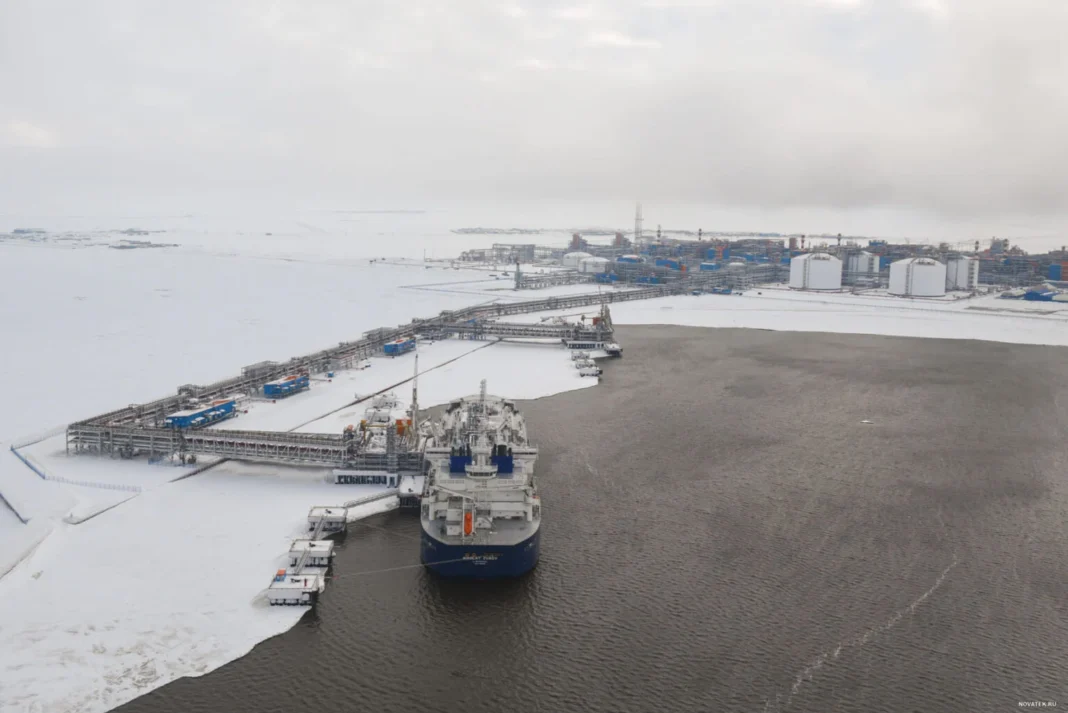


The European Union (EU) has become the primary destination of Russia’s Arctic liquefied natural gas (LNG) exports by turning into a backbone of the Russian LNG business in the first six months of 2026, dishing out billions of euros to assuage its LNG cravings with nearly all shipments from Yamal coming to EU ports, based on the findings of a new analysis from Urgewald, Germany’s non-profit environmental research organization.
According to a new analysis of Kpler data by Urgewald, the EU paid an estimated €5.96 billion ($6.82 billion) for Yamal Arctic LNG between January and June 2026, with 136 cargoes delivered to EU ports out of 140 shipped globally, representing over 97% of all deliveries.
Sebastian Rötters, Sanctions Campaigner at Urgewald, commented: “In the fifth year of the war against Ukraine, the EU is still helping keep Russia’s Arctic LNG sector afloat. Yamal LNG depends on a small, specialised fleet, European ports and European services to keep exports flowing. Europe continues to provide all three.
“The figures are stark. Almost every Yamal cargo in the first 6 months of 2026 went to Europe. China has largely disappeared as a destination during this period, while the EU has become even more central to the project. This is not happening in a vacuum.
“In the first half of 2026, Russia intensified its assault in Europe’s worst war since World War II, targeting Ukraine’s energy infrastructure and civilian sites on an unprecedented scale. Meanwhile, Europe continued to import more than 55,000 tonnes of LNG from Yamal every single day on average.”
Urgewald emphasized that the main EU destinations for Russian LNG in the first six months of 2026 were France with 51 cargoes and 3.74 million tonnes, Belgium with 37 cargoes and 2.70 million tonnes, Spain with 34 cargoes and 2.50 million tonnes, the Netherlands with 12 cargoes and 881,970 tonnes, and Portugal with 2 cargoes and 147,170 tonnes.
Among the main European ports that received Russian LNG in H1 of 2026 were Zeebrugge with 37 cargoes, Dunkerque with 26 cargoes, Montoir with 25 cargoes, Bilbao with 17 cargoes, Gate/Rotterdam with 12 cargoes, Mugardos with 10 cargoes, Barcelona with 4 cargoes, Sagunto with 2 cargoes, and Sines with 2 cargoes.
The data for the first six months of 2026 underscores the continued role of non-Russian shipping companies in keeping Yamal LNG moving, including Seapeak, linked to the UK and Canada through its Glasgow, London and Vancouver entities, with 56 cargoes, 4.10 million tonnes, and around 40% of total Yamal LNG volumes.
There is also Dynagas, a Greece-linked player with 49 cargoes and 3.58 million tonnes, representing around 35% of the Russian project’s LNG volumes, and MOL and COSCO, which are connected to Japan and China, with 35 cargoes and 2.57 million tonnes, amounting to about 25% of total shipments.