



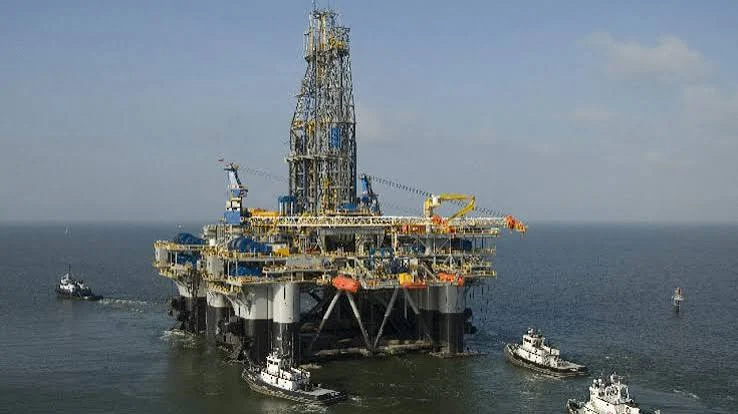


After years of opaque allocations, Nigeria’s latest seven‑hour oil block bidding saw 31 winners from 143 bidders, but doubts over transparency and capacity persist as the 2026 round approaches, DAMILOLA AINA reports
For years, the allocation of Nigeria’s oil blocks was often associated with long gaps between licensing rounds, regulatory uncertainty and questions about how the country’s prized petroleum assets were awarded.
But on Tuesday, the process unfolded in full view.
Inside the lavishly decorated green-and-white hall of the Transcorp Centre in Abuja, more than 50 tables were occupied by oil executives, bidders, observers, regulators and journalists, all focused on the screens and proceedings that would determine the next owners of Nigeria’s oil and gas assets.
The atmosphere was a sharp departure from the uncertainty that had long characterised the allocation of the country’s petroleum assets. For hours, companies competed for blocks in a transparent and closely watched process, each hoping to secure a foothold in one of Africa’s most resource-rich oil provinces.
The commercial bid conference, organised by the Nigerian Upstream Petroleum Regulatory Commission, marked the culmination of an eight-month licensing process and the second consecutive year in which companies have competed for Nigeria’s oil and gas assets through a structured bidding process.
It also signalled a significant shift in the way the country manages its upstream sector. Before the passage of the Petroleum Industry Act in 2021, Nigeria’s competitive oil block auctions were not conducted on a regular or predictable basis. Major licensing rounds were often separated by years, with regulatory uncertainty, litigation and discretionary allocations by the government of the day contributing to a system that lacked a consistent bidding calendar. The current process, however, is beginning to change that narrative.
Following the 2024 licensing round, the 2025 commercial bidding process has now been concluded, with another round expected in 2026. The development marks the emergence of annual competitive licensing rounds as a more structured feature of Nigeria’s upstream oil industry.
For a sector that once endured a 17-year gap between major general oil block bid rounds, the return of consecutive annual competitions represents more than an administrative change. It is a deliberate attempt to create a predictable investment environment, attract fresh capital and accelerate the development of Nigeria’s vast but largely underdeveloped hydrocarbon resources.
This Licensing Round was announced by the Federal Government on 11 November 2025, in accordance with the Petroleum Industry Act 2021. Fifty oil and gas blocks were offered across seven sedimentary basins, including 16 blocks in the Niger Delta Onshore, 18 in the Niger Delta Shallow Water and one in the Niger Delta Deep Offshore. The assets also include three blocks in the Benin Basin Onshore, four in the Anambra Basin Onshore, four in the Chad Basin Onshore and four in the Benue Trough.
The bid portal opened on 1 December 2025, while a pre-bid conference was held on 14 January 2026. Registration closed on 27 February, with prequalification completed on 16 March.
But beyond the spectacle of open competition lay the more important question: how transparent was the process, and did the results stand up to scrutiny?
The Commission Chief Executive of the NUPRC, Oritsemeyiwa Eyesan, in her welcome address, delivered the first head-spinning blow that the highest financial bidder would not automatically emerge as the winner of an oil block in the ongoing 2025 Licensing Round, insisting that technical competence and operational capability would play a decisive role in determining successful bidders.
She also revealed that 13 frontier basins of the 50 oil and gas blocks offered under the 2025 Licensing Round failed to attract commercial bids and would be returned to the government’s licensing basket