



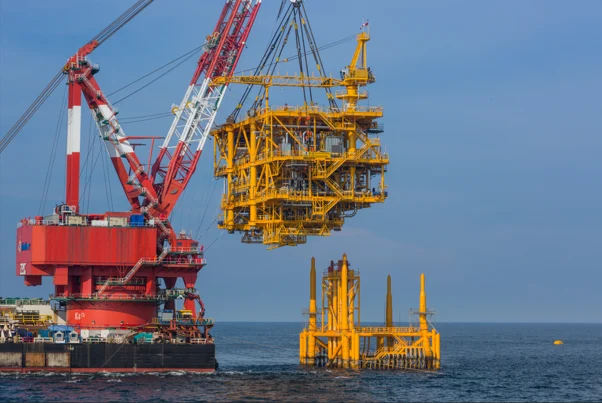


Offshore operations bring together vessel crews, client representatives, contractors, and project teams. Nobody ever disagrees on the goal of the project. The disagreement happens the moment the question shifts from “what needs to be done?” to “is it safe to do it now?”Someone must make the call. And when conditions are marginal, everyone in that room has a different number in their head.That’s where the cracks appear.
After a weather delay, who decides when to restart? The client representative, pushed by an onshore schedule, may – manually – read the sea state differently to the deck supervisor responsible for the crew at the rail. The project team sees a closing window. The bridge sees wave heights that don’t match the forecast. Everyone is working from the same event, but not from the same facts.
Forecasts are useful and no serious offshore operator dismisses them. But a forecast is a probability, not a measurement. It describes potential conditions across a region, across a time window. What it cannot do is tell you, with precision, what the wave height, period, and direction are at your vessel’s exact position right now, as the crew prepares to move.
That gap is where subjective judgment fills in.
Experience and seamanship matter. But when one qualified person calls conditions acceptable, and another calls them borderline, what follows isn’t a decision, but a negotiation. Pressure enters the room. The people most exposed to consequences may have the least power in that conversation.
Across different offshore vessel hazards, this pattern exists across every vessel category, from platform supply vessels and anchor handlers to construction and installation vessels, patrol craft and survey ships. While the specific risks vary, the underlying problem doesn’t. Go or no-go decisions, personnel transfer windows, crane lifts, cargo handling: every one of them requires a judgment call about sea state. Every one of them becomes harder to make well, and harder to defend afterwards, without measured local data