


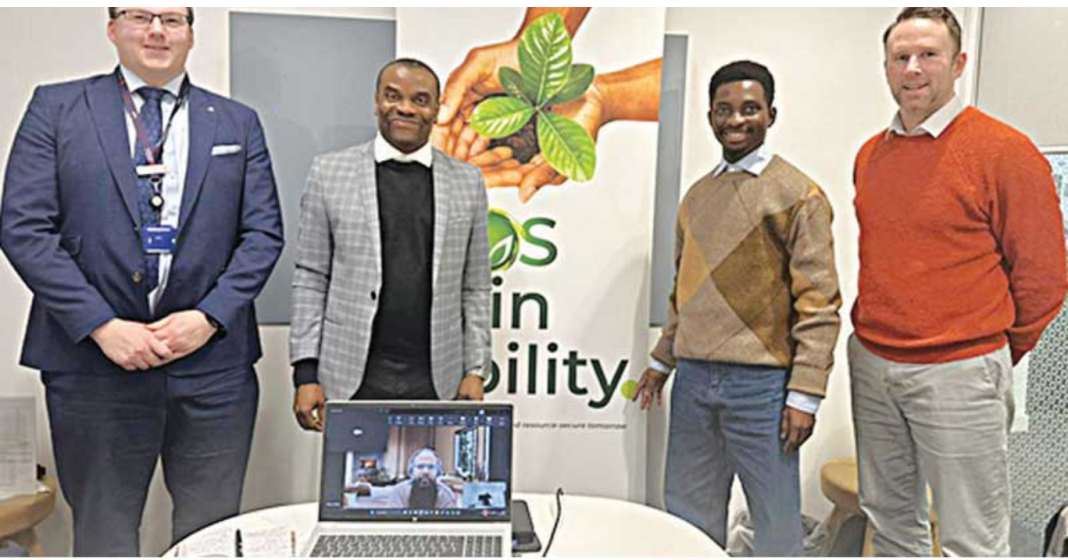


SOStainability has secured support from the University of Staffordshire, United Kingdom, to develop a comprehensive digital dashboard for renewable energy adoption and net-zero progression for businesses, charities, and public entities.
The support is part of the Advanced and Digital Technologies Innovation Accelerator (ADTIA) programme at the university, which is funded by the Newcastle-under-Lyme Borough Council through the UK Shared Prosperity Fund (UKSPF).
The dashboard is being developedas a comprehensive, multi-purpose platform focused on renewable energy opportunities and net-zero pathways. It will showcase a diverse range of solutions on offer, including ventilation, lighting, heating, refrigeration, compression, and renewable energy technology such as solar, wind, battery storage, and electric vehicle (EV) chargers, among others.
The focus of the technology is to help businesses, households, and other entities easily take advantage of listed opportunities, which range from public sector grants, soft loans, industry facilitations, and private sector-driven incentives,including discounts, power purchase agreements, and other support systems that lead to the adoption of renewable energypractices.
Beyond the offers, the application will essentially facilitate and sustain connections between service providers and renewable energy users, supporting beneficiaries in determining, measuring, recording progress, and achieving their net-zero targets.
Speaking on the initiative, Oke Epia, Chief Executive of SOStainability, said the dashboard is an important tool to help businesses, charities, communities, and even households plan and implement their decarbonisation and energy-efficiency goals in a structured, standardized, and sustained manner through the use of technology.
He said: “The development of this application is a very significant step for us. As we make progress in the development of this innovative technology, we look forward to the immense possibilities this application brings, particularly for enhancing energy efficiency and reducing costs in homes and businesses.
For many Nigerians, the word “forest” might bring to mind vague images of shaded woodlands far from city life—places that seem distant from the daily concerns of households, markets, classrooms, and towns. Some think of forests simply as sources of wood for building or fuel. But this limited view misses a deeper truth: forests are living, dynamic systems that intersect with every part of life in Nigeria; people, climate, economy, culture, and future opportunity.
Forests are nature’s long-term investment in our climate stability. They absorb carbon released by cars, factories, and farms and store it in wood, leaves, and soil. This invisible work quietly cools the Earth and slows the pace of climate change. Forests also hold water in their roots, stabilize soils, nurture biodiversity, and provide food, medicine, and materials that millions of Nigerians depend on daily. When forests shrink, the consequences ripple out: rainfall patterns shift, droughts and floods intensify, rural incomes suffer, and the nation’s ability to meet its climate goals weakens.Yet despite these essential roles, Nigeria’s forests are under severe strain,and that should matter not just to environmentalists but to every citizen who cares about food security, jobs, health, and the future of the country.
A crisis hidden in plain sight: The rapid loss of forests
Nigeria’s forests have been diminishing at a pace that would be alarming in any context. Official statements and environmental assessments show that more than 90 percentof the country’s original forest cover has been depleted, with over 400,000 hectares lost every year to logging, agricultural expansion, fuelwood dependence,mining,and rapid urban growth. Vice President KashimShettimarecently described this not only as an environmental crisis but as an “economic emergency.”
According to the Food and Agriculture Organization (FAO), Nigeria’s forest area has fallen drastically over the past decades, now standing at less than 10 million hectares, a fraction of what once existed. This decline is not just about trees;it represents a massive release of stored carbon into the atmosphere, worsening climate change.Every hectare of forest cleared releases carbon that has been stored for decades. Once gone, it takes generations to rebuild that storage capacity.
What drives this loss? In rural and peri-urban communities, wood is still the primary source of cooking fuel for many families. Small-scale clearing for farms, combined with legal and illegal logging, mining, and sprawl from expanding cities, steadily chips away at remaining forests. Weak monitoring, limited enforcement of forestry laws, and competing land-use pressures only accelerate these trends. This rapid disappearance has real costs. Beyond losing trees, Nigeria loses the climate benefits they provide, the habitats of countless plant and animal species, and the livelihoods tied to healthy forests.
Forests as carbon sinks: Nature-based climate solutions in our hands
When a tree grows, it pulls carbon dioxide (a greenhouse gas)from the atmosphere and stores it in its wood and roots. This “carbon sink” role is one of the most powerful natural mechanisms for slowing climate change, meaning itreduces the amount of heat-trapping gases in the atmosphere. Nigeria’s forests collectively hold over half a billion metric tons of irrecoverable carbon, especially in rich ecosystems like the mangroves of the Niger Delta. These coastal forests rank among the most significant carbon reservoirs in Africa. Protecting forests keeps this carbon locked away rather than releasing it back into the atmosphere, where it would accelerate warming. In economic terms, this is an invisible service with immense value, one that the emerging carbon market framework in Nigeria aims to recognize and reward.