




As Nigeria leans more on World Bank financing to support social programmes, the President Bola Tinubu administration aims to ease reform pains, with success hinging on accountability, institutional capacity and effective implementation, writes SAMI TUNJI
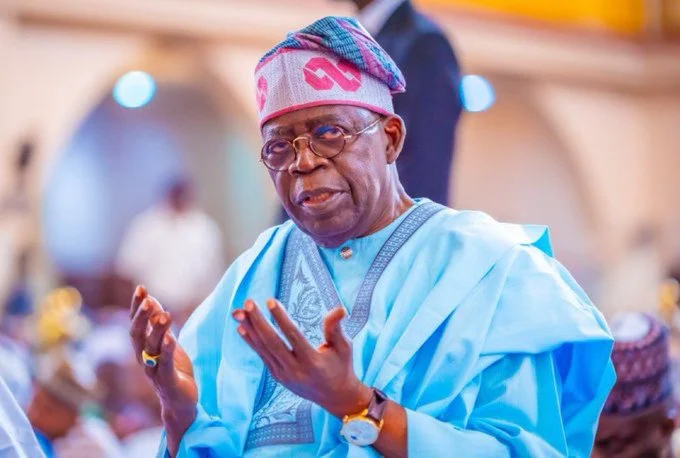
When President Tinubu unveiled a group of World Bank-backed programmes at the State House Banquet Hall in Abuja on 16 July, the ceremony was presented as the social-policy answer to the economic reforms that have defined his administration.
The programmes span livelihood support, food security, basic education, primary healthcare, public-sector governance and assistance for communities affected by displacement. Collectively, they reveal how the administration is increasingly relying on concessional financing and results-based World Bank programmes to extend social spending beyond the limits of the federal budget.
At the centre of the package are the $500m additional financing for the Nigeria Community Action for Resilience and Economic Stimulus programme, the $300m Solutions for the Internally Displaced and Host Communities project and the Human Capital Opportunities for Prosperity and Equity programmes covering governance, primary healthcare and education.
Although Tinubu’s address described NG-CARES as a $1.25bn programme, the figure includes the original $750m operation and $500m in fresh additional financing. The new financing being launched across NG-CARES, SOLID and the HOPE components is therefore distinct from the cumulative value of the programmes.
The Minister of State for Budget and Economic Planning, Dr Doris Uzoka-Anite, put the fresh package at about $2.42bn in her remarks at the event. That figure broadly reflects $500m for NG-CARES additional financing, $300m for SOLID, $500m for HOPE-Governance, $570m for HOPE-Primary Healthcare and about $552m for HOPE-Education, including support from the Global Partnership for Education.
Behind the numbers is a policy shift. Rather than relying solely on annual appropriations to fund health centres, schools, social registers, cash transfers and livelihood schemes, the government is embedding these interventions in multiyear programmes financed largely through the World Bank’s International Development Association.