





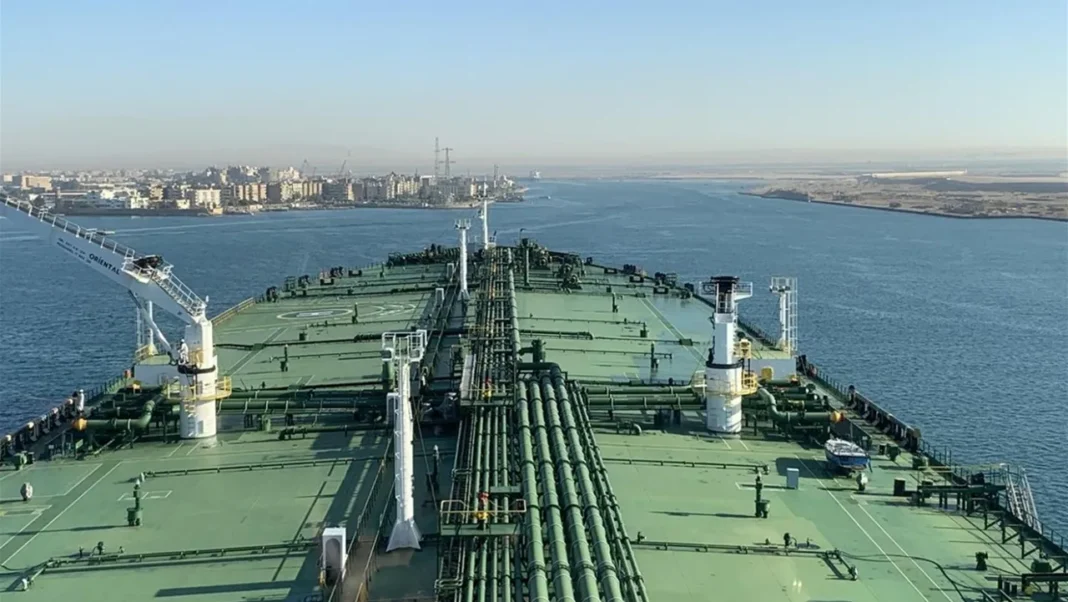


Despite ongoing efforts to de-escalate tensions in the Middle East, there is growing anticipation of renewed fighting between Iran, the United States, and Israel ,If another round of intense strikes takes place in the next weeks, the repercussions will once again be felt across the region’s energy and shipping sectors. This would come as some transits have been gradually recovering, and regional exporters adapting to an extremely challenging security situation by relying on workarounds and new ways of trading. These two sectors have been at the heart of the eight-month war and key targets for Iran as it seeks to maintain pressure on regional and international markets.Crude oil flows have gradually recovered in recent months. Data from Kpler shows that at least 16.5 million barrels per day (bpd) of crude were exported from the Middle East in September. The commodities data and analytics firm describes these volumes as matching the pre-war average, excluding Iranian exports. However, the flows no longer follow the same route they did before the war, namely the traditional outbound lane in the middle of the Strait of Hormuz. Some volumes are also reliant on Saudi and Emirati pipelines, which are themselves vulnerable to attacks, as the Saudi East-West pipeline has demonstrated. Other volumes require ship-to-ship transfers in the Gulf of Oman, where infrastructure constraints have caused bottlenecks and delays – discussed in a previous article.
This crude recovery also remains inconsistent due to geopolitical risks, sustaining risk premiums in crude prices and freight rates. Iran-led attacks this month suggest that Tehran has sought to slow the recovery and sustain pressure on these flows. Preventing a stable recovery and keeping risks elevated are key objectives of Iran’s maritime campaign, knowing that regional countries are resorting to different measures to keep energy supplies flowing despite the sustained security risks.
Yet while attention has focused overwhelmingly on crude, it’s crucial to remember that flows of other commodities, such as liquefied natural gas (LNG) and refined products, are recovering slowly. This will depend on what Iranian infrastructure any possible US and Israeli strikes target, and Iran’s response to that. Since crude exports have been driving the gradual oil recovery in the region, these volumes will be closely watched. Any transit disruption will likely be the outcome of both strikes within Iran, as some vessels may pause transit to assess the geopolitical risks, as well as Iran’s direct ship attacks.Additional challenges could emerge in the event of another round of escalation.The following shows the gradual recovery in some energy flows out of the region and highlights four developments to watch if fighting resumes.