





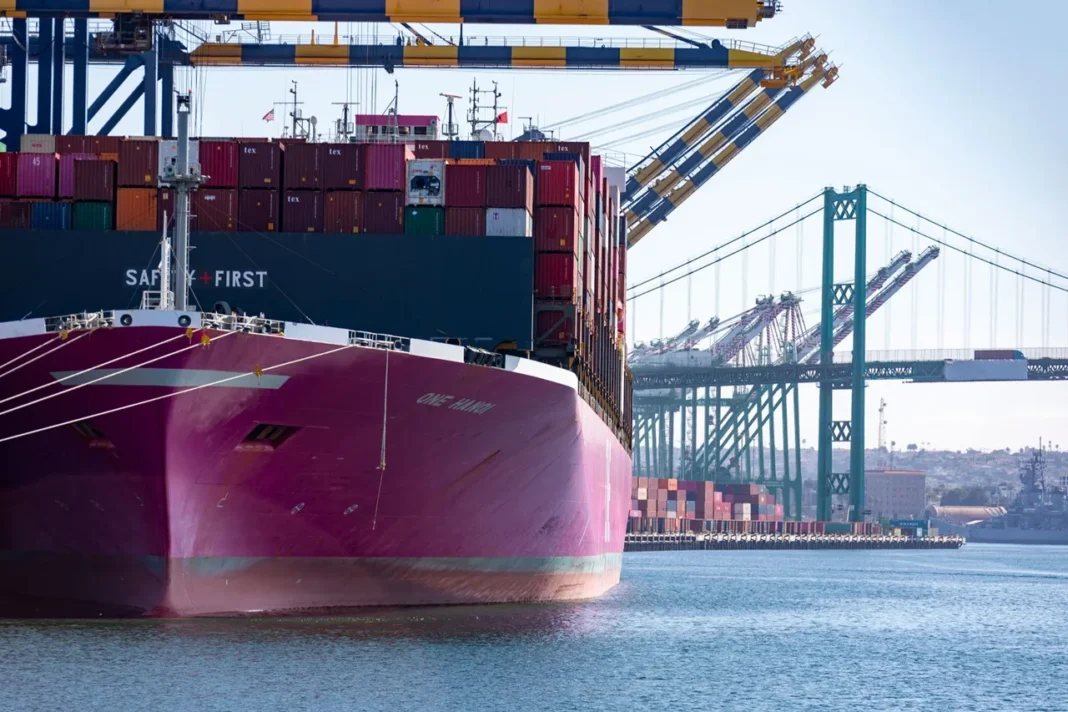


A strike next week by a small contingent of marine terminal security workers on the San Pedro Bay waterfront in Southern California could become a major headache for US container networks.
The Pacific Maritime Association (PMA), which represents US West Coast marine terminal employers, and the International Longshore and Warehouse Union (ILWU) Local 26, which represents approximately 250 watchmen at the ports of Los Angeles and Long Beach, have yet to reach agreement on contract negotiations.A strike by the union was imminent on 1 November when the latest contract extension was set to expire, but the two sides agreed on 30 October to extend the contract through 5pm (Pacific Standard Time) on 4 November, the day after the US midterm elections.“Negotiations will continue with the assistance of the Federal Mediation and Conciliation Service,” PMA stated in a release on 30 October. “PMA remains committed to reaching a fair agreement at the bargaining table that avoids disruption at the nation’s two busiest ports.”
PMA pointed out that while ILWU Local 26 members make up about 2% of the ILWU workforce in the San Pedro Bay container port complex, they work at terminals that handle more than half of the ports’ combined cargo, including 85% at the Port of Long Beach and 33% at the Port of Los Angeles.
“Longshore workers, marine clerks and other ILWU members work under a separate coastwide contract and are not party to this dispute,” PMA stated. “However, they are not expected to cross any Local 26 picket line, which could halt vessel, yard and gate operations at the affected terminals.”PMA asserted earlier in the week that every tentative agreement reached to date has been on a union proposal and significant differences remain, including wage proposals. Full-time watchmen currently earn an average of more than $170,000 a year plus employer-paid healthcare and pension benefits, according to the association.
Seatrade Maritime News has reached out to the ILWU for comment.because the effects of a strike could ripple through container supply chains, port customers are keeping close tabs on the negotiations.“Distributors that rely on imported inventory should watch for developments in contract negotiations and terminal operating restrictions,” the National Association of Wholesaler-Distributors stated. “Even a brief stoppage could delay container availability, inland transportation and replenishment schedules, particularly amid existing rail backlogs.”